
Prepare Home For Painting
How to Prepare Your Home for Painting
Preparing your home before painting begins can make the project easier to manage, protect your belongings and reduce avoidable interruptions. However, getting ready involves more than simply moving furniture out of the way.
For Melbourne homeowners planning an interior repaint, understanding what to organise beforehand and what to discuss with the painting contractor can help establish clear expectations.
You do not necessarily need to empty every room or complete surface preparation yourself. The right approach depends on the areas being painted, the home’s condition and the responsibilities agreed upon with your painter.
Why Is Preparing Your Home Important?
Painting work becomes easier to organise when rooms are accessible, belongings are accounted for and potential problems are identified early.
Simple preparations can help reduce the risk of accidental damage to personal items and make it easier to coordinate painting around everyday household activities.
Preparation also gives you an opportunity to confirm which surfaces are included, whether any repairs require attention and how the work will affect access to different rooms.
The key is to plan ahead without assuming that every preparation task is your responsibility.
What Should You Do Before Painters Arrive?
The following steps provide a practical starting point for getting your house ready for painting.
1. Discuss Furniture and Room Access
Furniture can make walls, corners and other painted surfaces difficult to reach.
Before the project starts, ask your painter whether furniture needs to be moved and who will handle that work.
You may be able to relocate smaller pieces yourself, while larger or heavier items might require additional arrangements.
Avoid moving heavy furniture without suitable assistance.
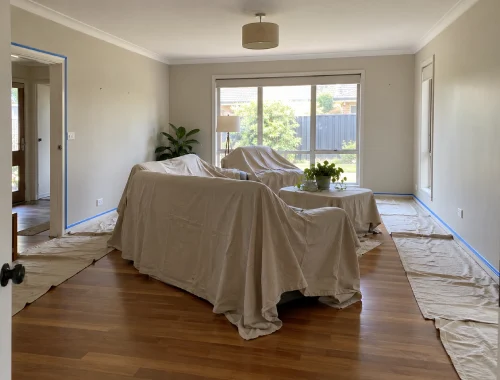
If furniture will remain in the room, confirm how it will be positioned and protected during painting.
Do not assume furniture moving or protective coverings are automatically included in every quotation.
2. Remove Personal and Fragile Items
Decorative objects, photographs, ornaments and other personal belongings may be safer in a separate area while painting takes place.
Consider removing lightweight wall decorations, valuables and fragile items from the rooms being painted.
For larger artwork, mirrors or wall-mounted fittings, establish whether specialist handling or additional assistance is needed.
Small belongings can be organised into labelled boxes to make them easier to locate and return once the work is complete.
This also helps reduce unnecessary handling of personal items during the project.
3. Check Walls for Visible Problems
Before repainting, look for obvious surface issues such as cracks, peeling paint, damaged plaster or moisture staining.
These conditions can affect the preparation required and the finished appearance.
Take photographs of areas you want assessed and mention any recurring problems, including previous repairs or leaks.
Avoid attempting extensive sanding, scraping or repairs without understanding the materials involved.
Older Australian homes may contain lead-based paint or asbestos-containing materials. If hazardous materials are suspected, seek appropriate professional advice before disturbing surfaces.
Identifying these concerns early allows the required assessment to take place before ordinary painting preparation begins.
4. Organise Wall Fixtures and Window Coverings
Curtains, blinds, removable shelves and decorative fittings may interfere with access to surfaces scheduled for painting.
Check which items can remain in place and which may need to be removed.
Some fittings can be taken down easily, while others may require specialist assistance.
Do not remove electrical fittings or interfere with wiring yourself. Electrical work must be handled by an appropriately licensed professional.
Discuss any fixture removal and reinstatement requirements before the project begins so these tasks are clearly accounted for.
5. Plan for Children and Pets
Painting projects can temporarily change how your household uses certain rooms.
Children and pets should be kept away from active work areas, painting equipment, wet coatings and materials.
Consider arranging a separate, comfortable space for them during the work.
For occupied homes, discuss access restrictions and when particular rooms may be suitable for normal use again.
Paint drying and curing times depend on the products, conditions and application requirements. Follow the relevant product guidance and your contractor’s instructions rather than assuming every room can be used immediately.
6. Consider Cleaning and Ventilation
Dust, grease and other surface contamination can affect paint adhesion, making appropriate cleaning an important part of preparation.
However, the amount and method of cleaning depend on the surface and its condition.
Ask whether any general housekeeping is expected before work begins and which cleaning or surface-preparation tasks are included in the painting scope.
For interior painting, suitable ventilation also deserves attention.
Australia’s YourHome guidance recommends good ventilation during and after indoor painting and considering paints with low or zero volatile organic compound (VOC) content.
Discuss ventilation arrangements with the painter, particularly where household members have sensitivities or rooms have limited airflow.
What Should You Handle, and What Should the Painter Handle?
Responsibilities vary between projects. The following guide can help you decide what to discuss before work begins.
| Preparation task | What to clarify |
|---|---|
| Removing personal belongings | Homeowners can generally organise their own valuables and smaller items. |
| Moving large furniture | Agree who will move it and whether assistance is included. |
| Protecting floors and furniture | Confirm the protective arrangements included in the quotation. |
| Surface cleaning and sanding | Establish what preparation the painter will perform. |
| Filling cracks or repairing plaster | Check whether the required repair work is included or quoted separately. |
| Removing fixtures and fittings | Clarify who is responsible and whether a specialist is required. |
| Hazardous materials or structural defects | Arrange appropriate professional assessment where necessary. |
This is a planning guide, not a description of services automatically included by Apex Painters Melbourne or any other contractor.
How Can You Prepare When Living in the House?
Moving out is not always necessary for an interior painting project, but occupied homes require additional coordination.
Consider which rooms your household needs throughout the day and whether essential spaces will remain accessible.
If several rooms are being painted, discuss whether the work can be organised in stages.
Think about temporary storage, access to bedrooms and bathrooms, and where household members can spend time away from active painting areas.
Where possible, identify a practical space for belongings from rooms that will be temporarily unavailable.
A clear discussion about household routines can help the contractor understand your needs and identify scheduling limitations.
What Should You Confirm Before Painting Starts?
Before the agreed start date, review the project details with your painter.
Useful questions include:
- Which rooms and surfaces are included in the quotation?
- Who will move or protect furniture and other belongings?
- Are surface repairs and preparation included?
- Do any fittings need to be removed beforehand?
- What access arrangements are required?
- How will occupied rooms be managed?
- What should happen if previously hidden damage is discovered?
- When can painted rooms and surfaces be used again?
Confirming these matters helps distinguish your responsibilities from the contractor’s agreed work.
Your Final Home Painting Preparation Checklist
Before the painters arrive, make sure you have:
- Organised fragile items and personal belongings.
- Discussed furniture movement and room access.
- Identified visible surface damage or moisture problems.
- Clarified fixture removal and protection responsibilities.
- Made suitable arrangements for children and pets.
- Discussed ventilation and room-use restrictions.
- Reviewed the painting scope and any outstanding questions.
You do not need to carry out every possible preparation task yourself. Focus on the arrangements relevant to your property and the work being undertaken.
Planning a Home Painting Project in Melbourne?
Preparing your home starts with understanding what needs painting and agreeing on how the work will be organised.
Apex Painters Melbourne is based in Pakenham and provides residential and interior painting services for Melbourne customers.
If you’re planning to repaint your home, contact Apex Painters Melbourne to discuss your property, the areas requiring attention and any preparation or access concerns.
Clarifying these details before work begins can help you understand the proposed scope and plan your household arrangements with confidence.