
Wall Repairs Before Painting
Which Wall Problems Matter Before Repainting?
A fresh coat of paint can transform the appearance of a room, but it cannot fix every problem underneath. Cracks, peeling paint, damaged plaster and damp patches can affect how the finished surface looks and how well the new coating performs.
For Melbourne homeowners planning to repaint, checking wall conditions first can help identify necessary preparation, avoid covering up unresolved problems and establish a more realistic project scope.
Some imperfections need straightforward surface preparation. Others may require plaster repairs, moisture investigation or specialist assessment before painting is appropriate.
Why Do Wall Repairs Matter Before Painting?
Paint creates a finish over the existing surface. It does not strengthen loose plaster, stop active moisture problems or permanently repair cracks caused by ongoing movement.
When underlying defects remain, they may become visible again or interfere with the new coating.
Proper preparation starts with understanding the condition of the wall. A sound, stable surface provides a more suitable foundation for painting than one with loose material, contamination or unresolved damage.
The important distinction is between cosmetic imperfections that can be addressed during preparation and problems requiring more extensive investigation.
Which Wall Problems Should You Check?
Not every mark or crack indicates a serious issue. However, certain visible defects deserve attention before repainting begins.
1. Small Cracks in Walls and Plaster
Fine cracks can develop around wall joints, corners and other areas as buildings settle or materials respond to normal movement.
Some may be cosmetic and suitable for conventional repair after assessment. Others can indicate movement that has not stopped.
Painting directly over a crack may temporarily disguise it, but the line can reappear if the underlying movement continues.
Pay closer attention to cracks that are widening, repeatedly returning, appearing alongside bulging walls or accompanied by doors and windows becoming difficult to operate.
Victoria’s Building and Plumbing Commission advises that significant cracking and possible foundation movement should be investigated by an appropriately qualified professional.
The cause matters more than simply hiding the visible line.
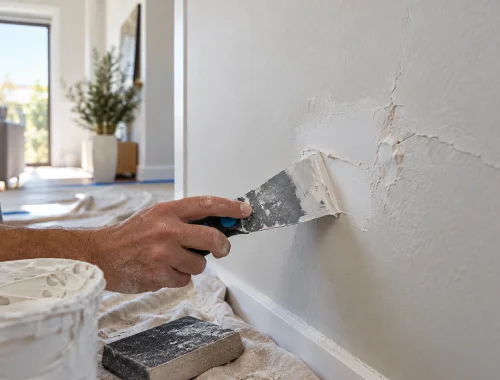
2. Holes, Dents and Damaged Plaster
Everyday household activities can leave dents, chips and holes in interior walls.
Minor damage may be addressed through suitable patching and surface preparation. Larger openings, loose plasterboard or extensive deterioration may require a different repair approach.
The size of a damaged area is not the only consideration. Its location, the condition of the surrounding material and the stability of the wall also matter.
Before repainting, establish whether the surface can be prepared as it stands or whether plastering work is needed first.
3. Peeling, Flaking or Bubbling Paint
Peeling paint can indicate that the existing coating is no longer adhering properly to the surface.
Possible contributing factors include inadequate previous preparation, incompatible coatings, moisture or deterioration of older paint layers.
Applying fresh paint directly over loose material is unlikely to produce a reliable finish.
The affected area needs assessment to determine why the existing coating is failing and what preparation is appropriate.
Bubbling or peeling accompanied by dampness deserves particular attention because the underlying moisture problem may need to be resolved before repainting.
4. Damp Patches, Water Stains and Mould
Discoloured walls, persistent damp patches, musty odours and mould can indicate an ongoing moisture problem.
Possible causes include condensation, plumbing leaks or water entering through the building envelope.
Painting over an affected surface does not remove the source of moisture.
The Victorian Government’s Better Health Channel recommends identifying and controlling moisture sources to prevent mould from returning.
If the cause is uncertain, or the affected material is extensively damaged, arrange an appropriate professional assessment before proceeding.
Moisture issues should not be treated as ordinary cosmetic painting defects.
5. Uneven Surfaces and Previous Repairs
Older walls sometimes show uneven patches, visible repair edges, inconsistent textures or areas where previous finishing work remains noticeable.
These imperfections can become more apparent under certain lighting conditions, particularly where light travels across the wall surface.
Depending on their condition, suitable preparation may improve their appearance before painting.
However, paint alone will not automatically create a perfectly level wall. Discuss the expected finish and any necessary surface work before the project begins.
Can You Paint Over Damaged Plaster?
The answer depends on the type and extent of the damage.
A stable wall with minor cosmetic imperfections may be suitable for preparation and repainting. Loose, crumbling, extensively cracked or moisture-damaged plaster may require repair or replacement of affected material.
Simply covering damaged plaster with paint can leave the original problem unresolved.
A useful assessment considers whether the existing surface is stable, whether the cause of damage has been addressed and whether the proposed preparation will create a suitable base for the new coating.
Where substantial plastering work is required, it should be identified as part of the project scope rather than assumed to be included in routine painting preparation.
When Should You Seek Specialist Advice?
Not every wall defect requires a structural investigation. However, there are situations where repainting should not be the first priority.
Seek appropriate professional advice when cracks are significant or worsening, walls appear to be moving, moisture damage continues to return, or plaster is severely deteriorated.
Older painted surfaces also require care. Australian Government guidance warns that homes built before 1970 may contain lead-based paint, and disturbing these coatings can create hazardous dust.
If lead paint is suspected, avoid sanding or scraping until the surface has been appropriately assessed and safe work arrangements established.
A painter can discuss painting requirements, but structural investigation, hazardous-material treatment and specialist moisture remediation should be handled by appropriately competent professionals.
How Can You Prepare for a Wall Assessment?
Before requesting painting or plastering work, take a few minutes to record what you can see.
Note the location of cracks or damaged areas, whether the problem appears to be changing and whether there are signs of moisture.
Photographs can help explain the affected areas, especially when requesting an initial quotation.
It is also useful to mention previous repairs, known leaks or recurring paint problems.
Ask which defects are included in the proposed preparation, which require separate work and whether any investigation is recommended before painting.
This helps reduce uncertainty about the finished result and the agreed scope.
Should You Repair Every Imperfection Before Repainting?
Not necessarily. The appropriate level of preparation depends on the surface condition, the desired finish and the underlying cause of the problem.
Small cosmetic imperfections may need relatively limited attention. More substantial defects can require additional work, while active moisture or structural concerns should be investigated before cosmetic improvements proceed.
The goal is not to undertake unnecessary repairs. It is to identify the work that genuinely matters for a sound surface and a suitable finished appearance.
Plan Your Repainting Project With Confidence
Taking time to understand existing wall problems can make the painting process easier to plan and help establish realistic expectations.
Apex Painters Melbourne is based in Pakenham and provides painting and plastering services for Melbourne customers.
If your walls have cracks, damaged plaster or deteriorating paint, contact Apex Painters Melbourne to describe their condition and discuss your painting or plastering requirements.
Where the damage suggests a moisture, structural or hazardous-material concern, arrange the relevant specialist assessment before proceeding with repainting.